
“Small Budget, Big Harvest.”
Introduction.
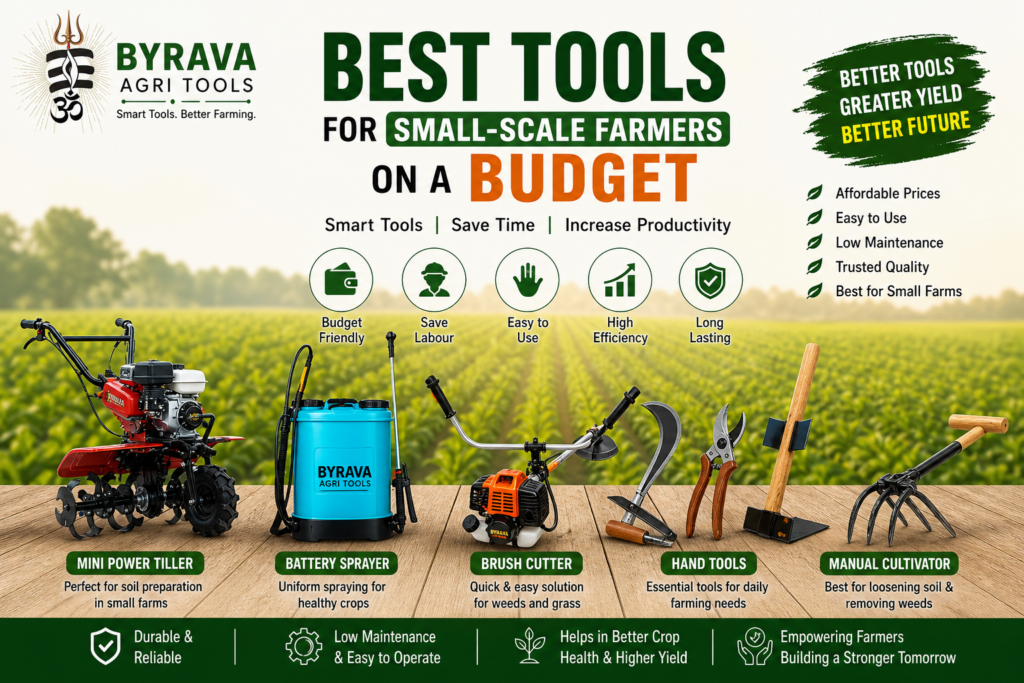
Farming on a small scale comes with several challenges, such as limited land, tight budgets, and rising labour costs. For many farmers, investing in expensive machinery is not always possible. However, modern agriculture offers a range of affordable and efficient tools that help small farmers improve productivity without heavy investment.
One of the main benefits of using these tools is the reduction in manual labour. Activities like soil preparation, spraying, and weeding can be tiring and time-consuming when done manually. Tools such as mini tillers, battery sprayers, and weed cutters make these tasks quicker and easier, saving both time and effort. This allows farmers to manage their work more efficiently.
Another advantage is better crop performance. Modern tools are designed to perform tasks with greater accuracy. For instance, battery sprayers ensure even distribution of fertilizers and pesticides, which leads to healthier crops and improved yields. Similarly, mini tillers help in proper soil preparation, enhancing soil quality.
These tools are also cost-effective and easy to maintain, making them suitable for farmers with limited resources. Many tools do not require high technical skills and can be operated easily. Manual tools like hand cultivators are especially useful as they do not need fuel or electricity, making them economical and eco-friendly.
In addition, these tools provide convenience and flexibility. They are lightweight, portable, and perfect for small farms and gardens. Farmers can easily store and transport them.
Mini Power Tiller
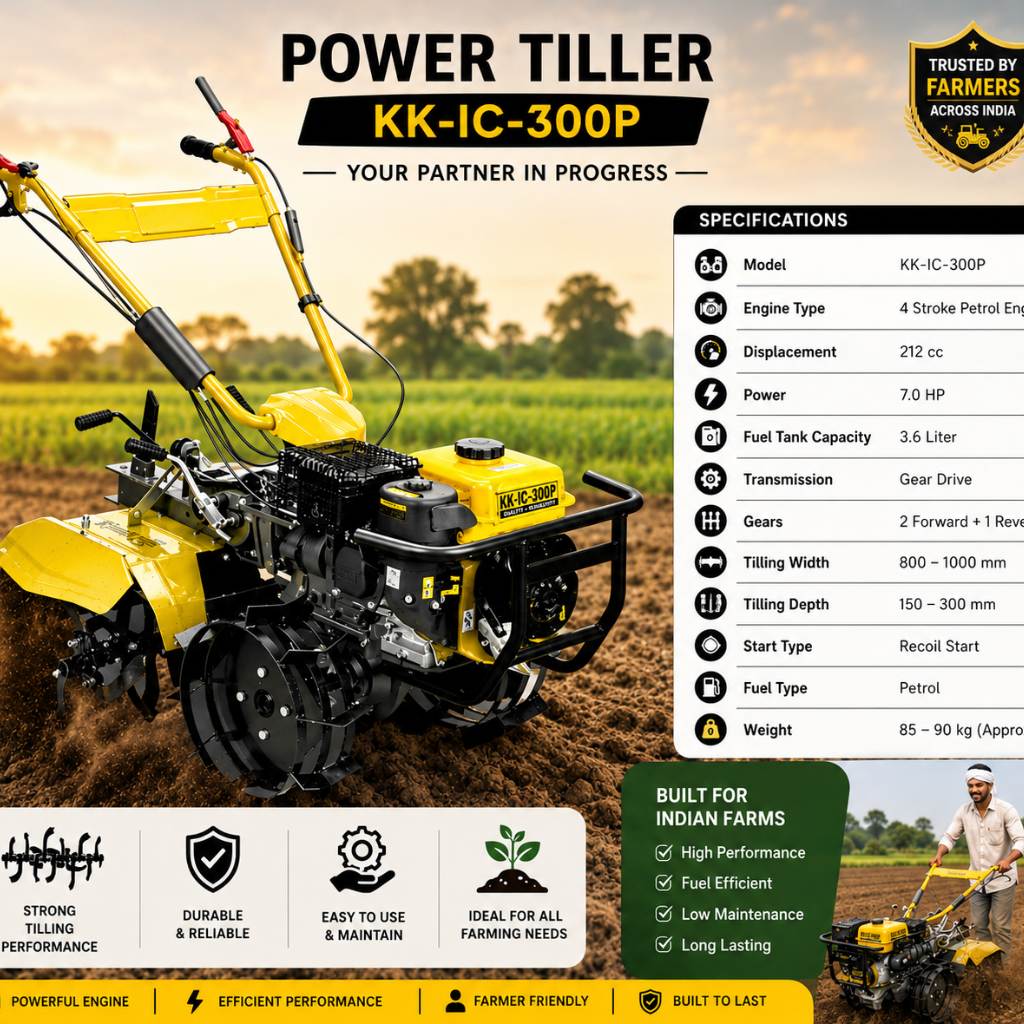
A mini power tiller is one of the most useful and practical tools for small-scale farmers, especially those working on limited land. It is designed to perform multiple farming operations such as soil preparation, weeding, and mixing fertilizers with ease. Unlike traditional methods that depend on manual labour or animal-driven ploughing, a mini tiller uses a small engine to perform tasks more quickly and efficiently. This makes it highly suitable for farmers who want to save both time and physical effort.
Features
The compact size and lightweight design of the mini power tiller make it easy to handle, even in narrow spaces like vegetable fields, orchards, and small plots. Farmers can operate it without requiring advanced technical skills, and its simple maintenance ensures long-term usability. The fuel-efficient engine helps in reducing operating costs, making it a cost-effective option for budget-conscious farmers.
Advantages
One of the biggest advantages of using a mini tiller is its ability to improve soil quality. It loosens the soil properly, increases aeration, and ensures better mixing of nutrients and fertilizers. This creates a healthy environment for crops to grow, ultimately leading to better yields. Additionally, it helps in removing weeds between crop rows, reducing competition for nutrients.
Battery Sprayer
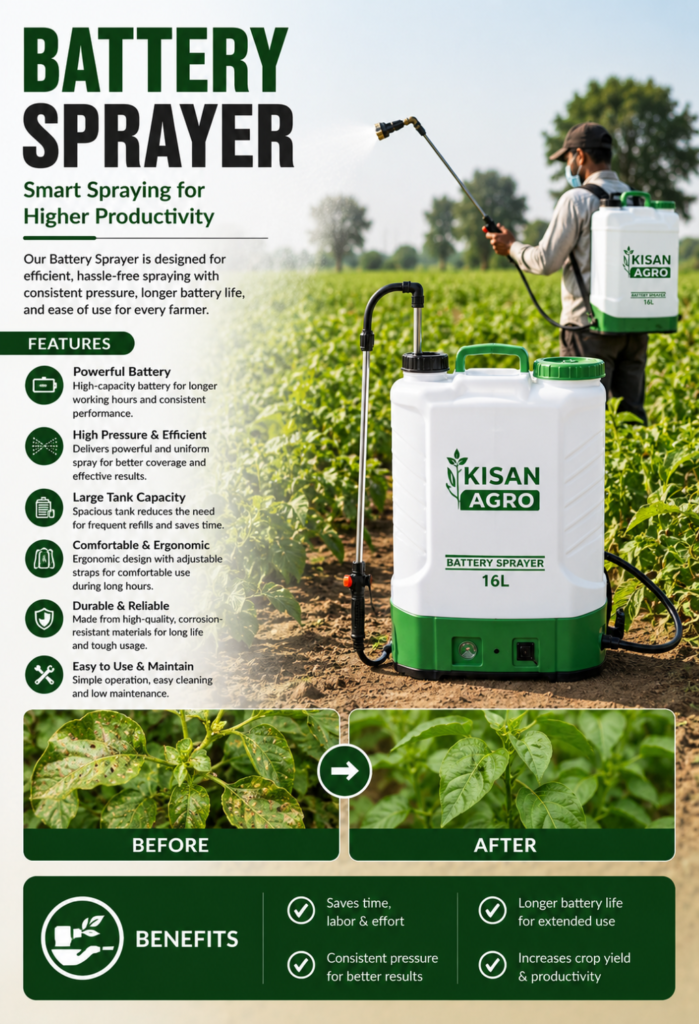
A battery sprayer is an essential and modern agricultural tool that helps farmers carry out spraying activities in a more efficient and convenient way. It is widely used for applying pesticides, fertilizers, and liquid nutrients to crops, ensuring proper plant protection and healthy growth. Compared to traditional methods, this tool reduces physical strain and improves overall productivity. Battery sprayers are mainly used for spraying pesticides to control pests and diseases, applying fertilizers evenly across crops, and distributing liquid nutrients for better plant growth. They are suitable for a variety of crops, including vegetables, fruits, and field crops.
Features
One of the key features of a battery sprayer is its battery-operated system, which eliminates the need for manual pumping. It comes with adjustable nozzles that allow farmers to control the spray pattern according to their needs. Its lightweight and portable design makes it easy to carry and use for longer durations without fatigue.
Advantages
Battery sprayers offer several benefits. They significantly reduce manual effort, as farmers do not need to continuously pump the device. They ensure uniform spraying, which helps in better crop protection and improved yield. Additionally, they save time by covering larger areas more quickly compared to traditional methods.
Brush Cutter.
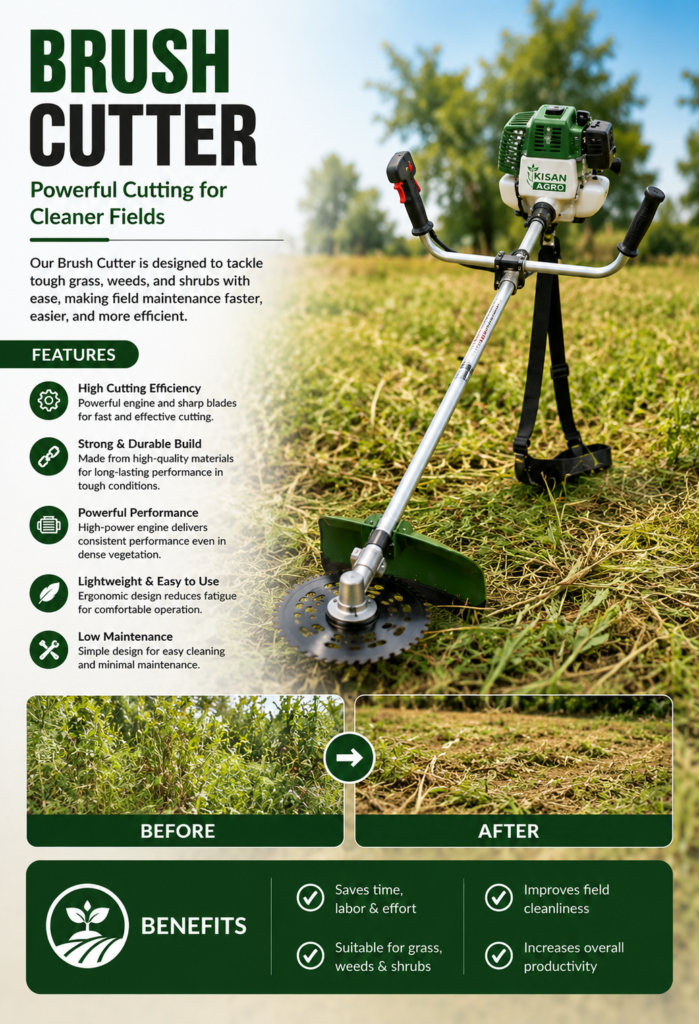
A brush cutter is a powerful and efficient agricultural tool used for cutting grass, removing weeds, and clearing unwanted vegetation from farms and fields. It is especially useful for small-scale farmers who need a quick and effective solution for managing overgrown areas. Compared to traditional manual methods, a brush cutter makes the task much easier, faster, and less physically demanding.
Brush cutters are mainly used for cutting thick grass, removing weeds, trimming bushes, and clearing land for cultivation. They are also helpful in maintaining farm boundaries, orchards, and plantation areas where regular cleaning is required.
Features.
One of the key features of a brush cutter is its high-speed rotating blade or nylon cutting line, which can easily cut through dense vegetation. It is available in both petrol and electric models, giving farmers flexibility based on their needs. The tool is designed to be portable, with a shoulder strap and ergonomic handle for easy operation and better control.
Advantages.
Brush cutters offer several benefits to farmers. They significantly reduce manual labour and save time by completing work quickly. They are highly efficient in removing weeds, which helps crops grow better by reducing competition for nutrients. These machines are also suitable for uneven or hard-to-reach areas where other equipment may not work effectively.
Seed Drilling Machine
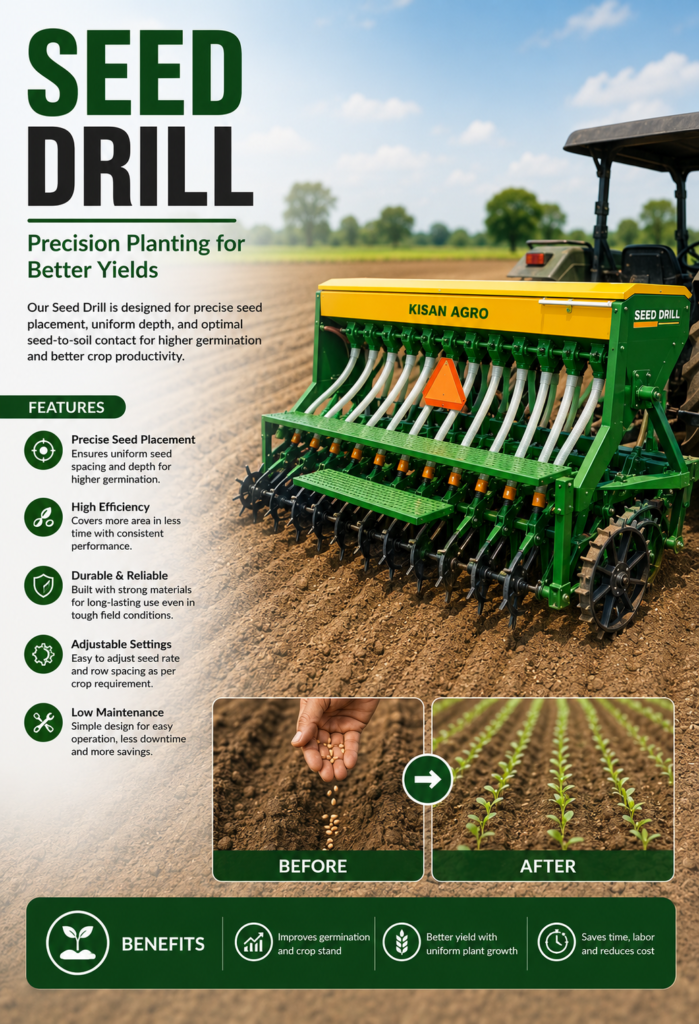
A seed drilling machine is an important agricultural tool that helps farmers sow seeds in a precise and efficient manner. It is especially useful for small-scale farmers who want to improve crop productivity while saving time and labour. Unlike traditional hand sowing methods, a seed drill ensures that seeds are placed at the correct depth and spacing, which is essential for healthy crop growth.
Seed drilling machines are mainly used for sowing seeds of crops like wheat, maize, pulses, and vegetables. They help in placing seeds uniformly in rows, which improves germination and makes crop management easier. These machines are also useful for covering seeds with soil after sowing.
Features
A seed drill comes with multiple seed tubes that allow even distribution of seeds. It is designed to control seed depth and spacing accurately. Many models are lightweight and easy to operate, making them suitable for small farms. Some seed drills can also be attached to mini tillers or tractors for better efficiency.
Advantages
One of the biggest advantages of a seed drilling machine is that it saves time and reduces manual labour. It ensures uniform seed placement, which leads to better germination and higher crop yield. It also minimizes seed wastage, making it cost-effective for farmers. Additionally, proper spacing between plants allows better nutrient absorption and easier weed control.
Chaff cutter
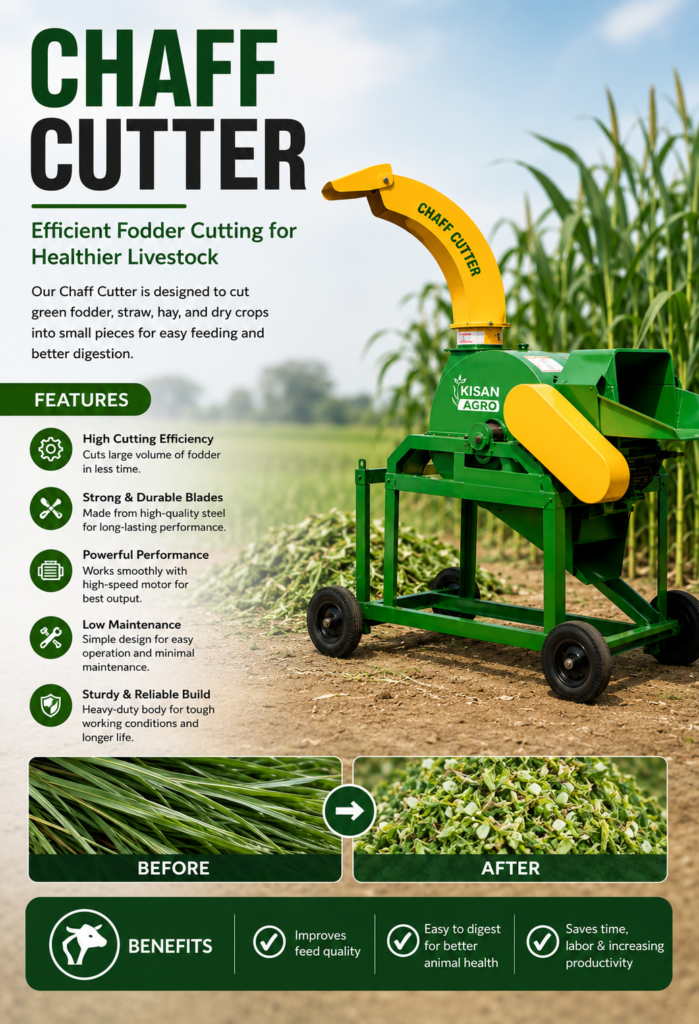
An electric chaff cutter is a useful agricultural machine designed to cut fodder into small pieces for feeding cattle and other livestock. It is widely used by small-scale farmers and dairy owners to prepare animal feed quickly and efficiently. Compared to traditional manual cutting methods, an electric chaff cutter reduces labour, saves time, and improves feed quality.
Electric chaff cutters are mainly used for cutting dry and green fodder such as grass, maize stalks, sugarcane leaves, hay, and other crop residues into smaller pieces. These smaller pieces are easier for animals to chew and digest, which helps improve their health and milk production.
Features
One of the main features of an electric chaff cutter is its powerful electric motor that enables fast and smooth cutting. It comes with sharp rotating blades for efficient fodder processing. Many machines are compact, easy to operate, and designed with safety covers to protect users during operation. Some models also include adjustable cutting sizes according to the farmer’s requirement.
Advantages
Electric chaff cutters offer several benefits to farmers. They save a significant amount of time and manual effort compared to hand-cutting fodder. The machine provides uniform fodder size, which improves digestion and reduces feed wastage. It also increases work efficiency and allows farmers to prepare large quantities of feed in less time. Since it operates on electricity, it is cleaner and more convenient than fuel-powered alternatives.
Modern Farming Tools Vs Traditional Farming Methods
Modern Farming Tools
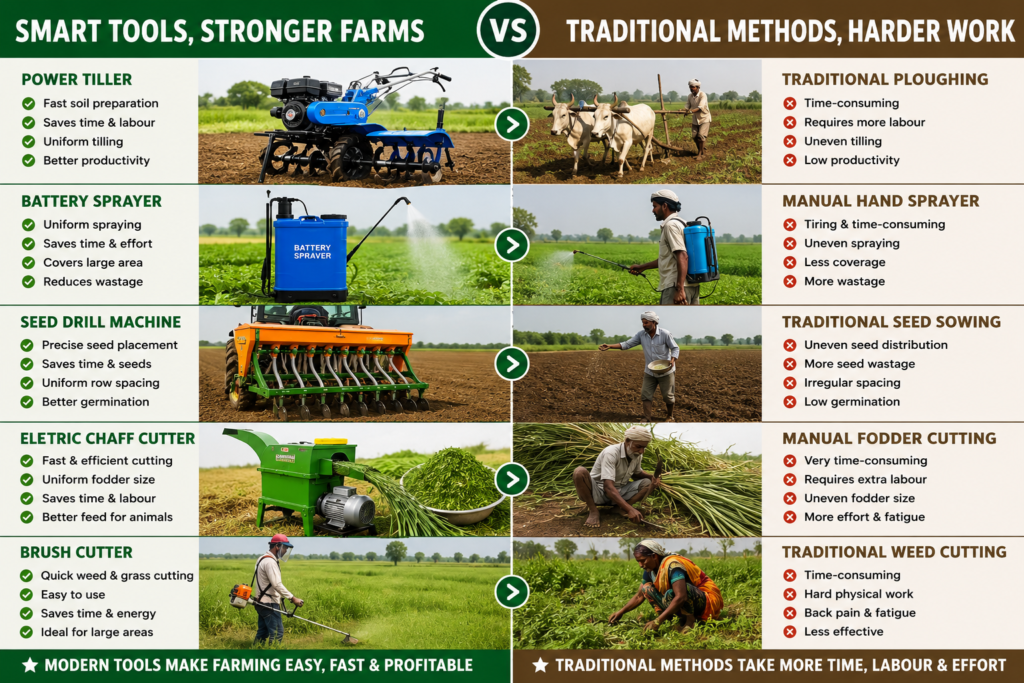
Modern farming tools have brought a major transformation in agriculture by helping farmers perform farming activities in a faster, easier, and more efficient way. Machines such as mini power tillers, battery sprayers, seed drill machines, brush cutters, and electric chaff cutters reduce the dependency on manual labour and improve overall productivity. These tools are specially designed to save time, reduce physical strain, and help farmers complete their work with greater accuracy. For example, a mini power tiller prepares the soil quickly and uniformly, while a seed drill machine places seeds at the correct depth and spacing, improving germination and crop growth. Battery sprayers ensure even spraying of pesticides and fertilizers, which helps protect crops from diseases and increases yield.
Modern farming equipment is also highly beneficial for small-scale farmers because it allows them to manage farming activities more effectively even with limited labour and resources. Most modern tools are compact, easy to operate, portable, and require less maintenance. They help farmers cover larger areas in less time and improve the quality of farming operations. In addition, these tools increase efficiency, reduce crop wastage, and support better farm management practices. Although modern machinery may require an initial investment and fuel or electricity for operation, it provides long-term benefits through higher productivity and labour savings. Overall, modern farming tools have made agriculture more advanced, profitable, and convenient for farmers.
Traditional Farming Methods
Traditional farming methods are the oldest forms of agriculture and mainly depend on human labour and animal power. Farmers traditionally used tools such as wooden ploughs, sickles, manual sprayers, and hand weeders to carry out farming activities. These methods require a large amount of physical effort and consume more time to complete tasks like ploughing, sowing, weeding, spraying, and harvesting. Since most activities are done manually, the work can become tiring and less efficient, especially for large farming areas.
In traditional farming, seed sowing is often done by hand, which may lead to uneven distribution of seeds and affect crop growth. Similarly, manual spraying may not provide uniform coverage of fertilizers or pesticides, reducing crop protection efficiency. Weed removal and fodder cutting also require continuous effort and more labour. Despite these limitations, traditional farming methods are still followed in some rural areas because they involve lower machinery costs and are based on locally available resources. However, compared to modern farming tools, traditional methods generally provide lower productivity, require more labour, and consume more time.
Traditional farming methods also play an important role in preserving cultural practices and maintaining a close connection between farmers and nature. These methods often rely on natural farming techniques, traditional knowledge, and locally available resources that have been passed down through generations. Farmers using traditional methods usually depend on seasonal rainfall, animal manure, and handmade tools for cultivation.Advantages and Disadvantages of Traditional and Modern Farming
Advantages of Traditional Farming
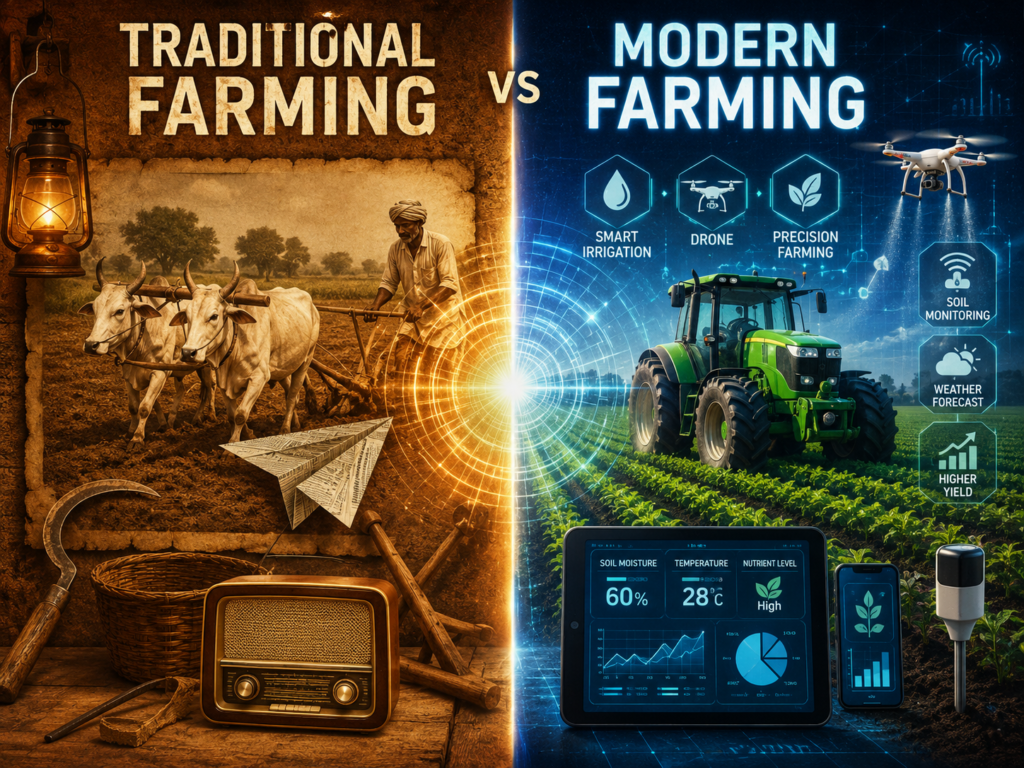
Traditional farming methods are affordable and require less investment in machinery and advanced technology. Farmers mainly use locally available resources, animal power, and handmade tools, which reduces dependency on expensive equipment. These methods are also closely connected with natural farming practices and often use organic manure instead of chemical fertilizers. Traditional farming helps preserve cultural practices and farming knowledge passed down through generations. In small villages, it also creates employment opportunities because more human labour is involved in farming activities.
Disadvantages of Traditional farming
Traditional farming is highly labour-intensive and time-consuming. Activities such as ploughing, sowing, weeding, and harvesting require significant physical effort. These methods may not provide accurate or uniform results, leading to lower productivity and reduced crop yield. Traditional farming also depends heavily on weather conditions and manual skills, making farming operations slower and less efficient. Due to limited technology, farmers may face difficulties in managing large farming areas effectively.
Advantages of Modern Farming
Modern farming uses advanced machinery and technology to improve agricultural productivity and efficiency. Tools such as tractors, power tillers, battery sprayers, seed drill machines, and harvesters help farmers complete work quickly and accurately. Modern farming saves time, reduces manual labour, and increases crop yield. It also ensures proper use of seeds, fertilizers, and pesticides, reducing wastage and improving crop quality. Farmers can manage larger farming areas more efficiently and achieve better profits through increased production.
Disadvantages of Modern Farming
Modern farming requires high investment in machinery,
fuel, electricity, and maintenance, which may be difficult
for small-scale farmers. Excessive use of chemical
fertilizers and pesticides can affect soil fertility and
harm the environment over time. Farmers also need
technical knowledge and proper training to operate
modern equipment effectively. In some cases, increased
use of machines may reduce employment opportunities
for agricultural labourers.
Productivity with the usage of modern tools
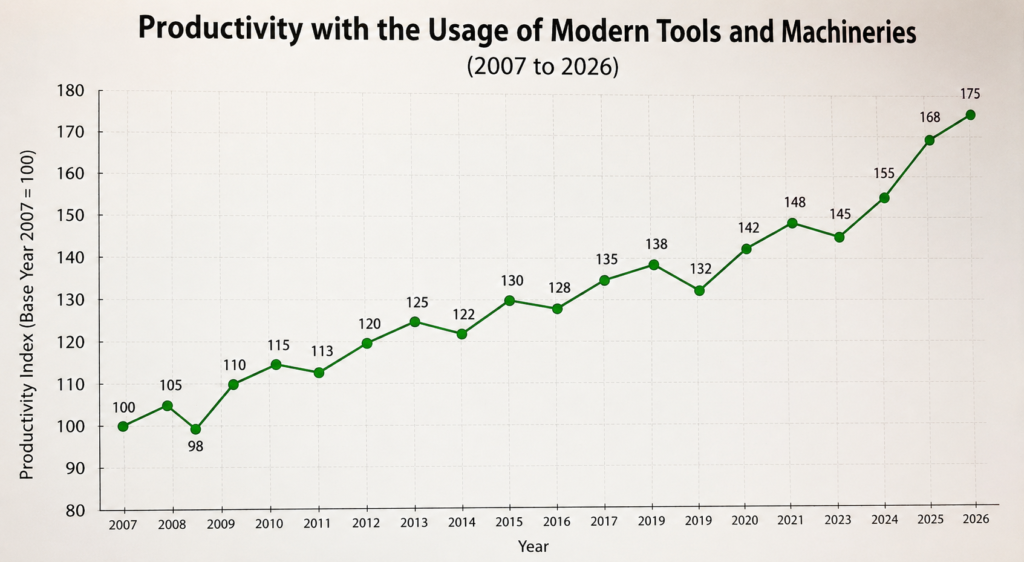
The graph shows the growth in agricultural productivity from 2007 to 2026 with the increasing use of modern farming tools and machinery. In the early years, productivity growth was slow because many farmers still depended on traditional farming methods and had limited access to advanced equipment. The slight fluctuations seen in the graph during this period represent challenges such as lack of awareness, unpredictable weather conditions, and limited investment in agricultural technology. Even with these difficulties, the gradual use of tools like power tillers and battery sprayers started improving farming efficiency.
During the middle years, productivity began to increase steadily as more farmers adopted modern farming practices. Machines such as seed drill machines, brush cutters, and electric chaff cutters helped farmers complete farming activities more quickly and accurately. These tools reduced manual labour, saved time, and improved the quality of farming operations. The graph also shows small ups and downs during certain years, which may have been caused by factors like fuel price increases, climate changes, or maintenance costs of machinery. However, the overall trend remained positive.
From 2017 onwards, productivity growth became much stronger due to rapid agricultural mechanization and better awareness among farmers. Government support, improved irrigation systems, and easier availability of modern machinery encouraged farmers to shift from traditional methods to modern techniques. The use of efficient tools improved soil preparation, spraying, sowing, weed control, and fodder cutting, resulting in higher crop yield and better farm management. Farmers were able to cultivate larger areas with less effort and better accuracy.
By 2026, the graph reaches its highest productivity level, showing the major impact of modern tools and machinery on agriculture. Advanced farming equipment and smart agricultural practices helped farmers reduce wastage, increase efficiency, and improve profits. Although the graph contains some fluctuations, the overall upward trend clearly indicates that modern farming technology has played a significant role in improving agricultural productivity and transforming farming into a more efficient and profitable activity.
Top 5 countries using Modern Farming
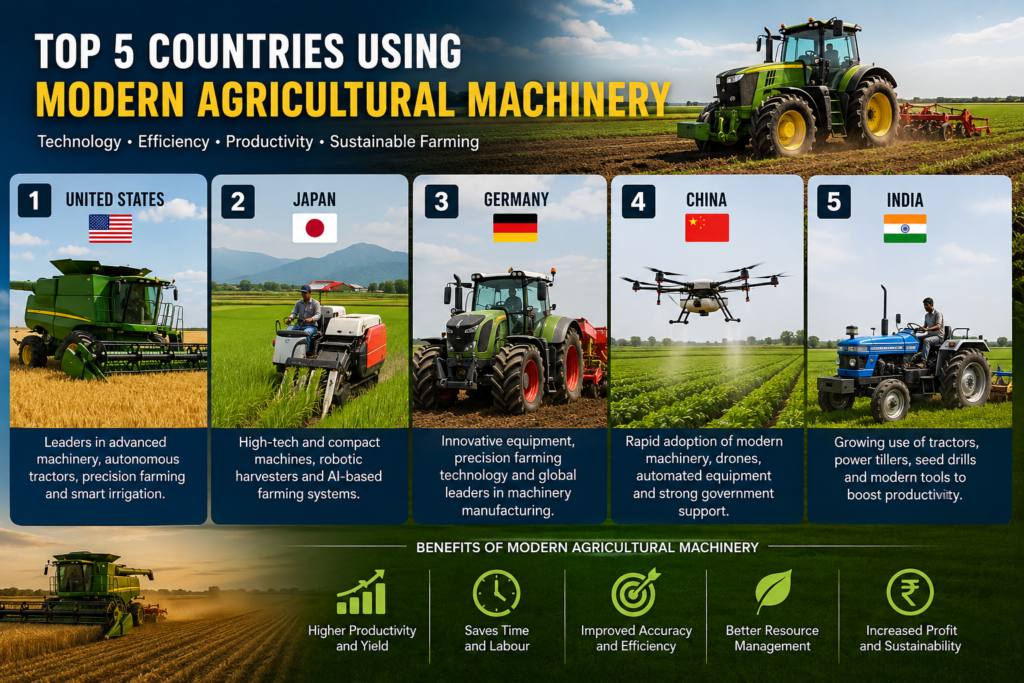
United States
The United States is one of the leading countries in agricultural mechanization. Farmers widely use advanced machinery such as autonomous tractors, combine harvesters, GPS-guided seeders, drones, and smart irrigation systems. Large-scale farming and high investment in technology have made agriculture highly productive and efficient in the country.
Japan
Japan is known for its advanced and technology-driven farming methods. Due to limited agricultural land and labour shortages, Japanese farmers use compact tractors, robotic harvesters, automated planting machines, and AI-based farming systems. The country has one of the highest levels of mechanization per unit of farmland.
Germany
Germany is a major producer and user of modern agricultural machinery. Farmers use high-tech tractors, precision farming equipment, automated irrigation systems, and smart monitoring technologies. German companies are also global leaders in manufacturing agricultural machinery and innovation.
China
China has rapidly adopted modern agricultural machinery to increase food production and reduce manual labour. The country uses drones, smart tractors, automated seeders, and modern harvesting equipment on a large scale. Government support and technological advancements have accelerated agricultural mechanization in recent years.
India
India is increasingly adopting modern agricultural tools and machinery, especially in states with high agricultural activity. Farmers widely use tractors, power tillers, seed drill machines, battery sprayers, and harvesters to improve productivity and manage labour shortages. Government subsidies and awareness programs are also encouraging the use of modern farming equipment
Conclusion
Modern agricultural tools and machinery have brought a significant transformation in the farming sector by improving productivity, reducing manual labour, and saving valuable time for farmers. Tools such as power tillers, battery sprayers, seed drill machines, brush cutters, and electric chaff cutters have made farming operations easier and more efficient. These modern technologies help farmers achieve better crop management, uniform farming practices, and higher agricultural output compared to traditional methods.
Traditional farming methods, although deeply connected with culture and natural practices, require more physical effort and consume more time. Activities such as ploughing, sowing, spraying, and weed removal were mainly dependent on human labour and animal power. While traditional farming played an important role in the development of agriculture, it often resulted in lower productivity and limited efficiency. The comparison between traditional and modern farming clearly shows how technology has helped improve agricultural performance and reduce the workload of farmers.
The productivity graph from 2007 to 2026 demonstrates the positive impact of modern machinery on agriculture. Even though there were slight fluctuations due to weather conditions, economic factors, and changing farming situations, the overall productivity trend continued to rise. Increased awareness, government support, improved irrigation systems, and the adoption of modern tools contributed greatly to this growth. Countries such as the United States, Japan, Germany, China, and India have become strong examples of how agricultural mechanization can improve farming efficiency and food production.
In conclusion, the use of modern farming tools and machinery is essential for the future development of agriculture. Modern technology not only increases productivity and profitability but also helps farmers manage farming activities more effectively with less effort. Although traditional farming methods still hold cultural and environmental importance, the integration of modern machinery has become necessary to meet the growing food demands and challenges of today’s agricultural sector.